
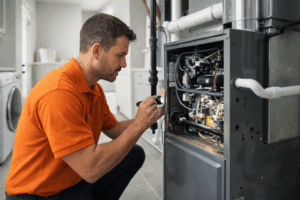
Experiencing a furnace that won’t ignite can be a frustrating and concerning issue for homeowners, especially during the colder months. This comprehensive troubleshooting guide will help you understand the common causes of ignition failures and provide step-by-step solutions to get your furnace back up and running. By addressing these issues, you can ensure a warm and comfortable home environment. In this article, we will explore the reasons why your furnace may be clicking but not igniting, how to troubleshoot a gas furnace that won’t light, the role of key furnace components in ignition problems, when to call a professional HVAC technician, the importance of regular maintenance, and frequently asked questions about furnace ignition troubleshooting.
Why Is My Furnace Clicking But Not Igniting? Common Causes Explained

A clicking sound from your furnace can indicate several potential issues that prevent it from igniting. Understanding these common causes is crucial for effective troubleshooting.
What Does a Clicking Furnace Indicate About the Ignition System?
A clicking furnace often signals a problem with the ignition system. The igniter, which is responsible for lighting the gas, may be faulty or dirty. If the igniter fails to produce a spark or heat (depending on the type of igniter), the furnace will click as it attempts to ignite the gas without success. Additionally, issues with the control board or wiring can also lead to clicking sounds, indicating a malfunction in the ignition sequence.
How Do Gas Supply Issues Affect Furnace Ignition?
Gas supply issues can significantly impact your furnace’s ability to ignite. If the gas valve is closed or malfunctioning, the furnace will not receive the necessary fuel to ignite. Homeowners should check the gas supply by ensuring that the valve is open and that there are no leaks in the gas line. Signs of gas supply problems may include a hissing sound near the gas line or a rotten egg smell, which indicates a natural gas leak (mercaptan added for odor).
How Can I Troubleshoot a Gas Furnace That Won’t Light? Step-by-Step DIY Checks
- Check Thermostat Settings: Ensure that the thermostat is set to “heat” and that the temperature setting is higher than the current room temperature. Sometimes, simple adjustments can resolve the issue.
- Inspect the Circuit Breakers: Check the circuit breakers to ensure that the furnace’s power supply is intact. If the breaker has tripped, reset it and see if the furnace ignites.
- Examine the Furnace Power Switch: Ensure that the furnace power switch is turned on. This switch is often located near the furnace and may resemble a standard light switch.
How Do I Check and Adjust My Thermostat Settings?
To check and adjust your thermostat settings, follow these steps:
- Locate the thermostat and ensure it is set to “heat.”
- Adjust the temperature setting to a few degrees above the current room temperature.
- Wait a few minutes to see if the furnace ignites. If it does not, further troubleshooting may be necessary.
What Are the Steps to Reset Circuit Breakers and Furnace Power Switches?
Resetting circuit breakers and the furnace power switch is a straightforward process:
- Locate the circuit breaker panel and identify the breaker labeled for the furnace.
- If the breaker is in the “off” position, switch it to “on.”
- For the furnace power switch, simply toggle it to the “on” position.
- Wait a few minutes and check if the furnace ignites.
What Role Do Furnace Components Play in Ignition Problems? Understanding Key Parts
Understanding the key components of your furnace can help diagnose ignition problems effectively.
How Does a Faulty Furnace Igniter Affect Ignition?
A faulty furnace igniter can prevent the furnace from lighting altogether. If the igniter is cracked, worn out, or dirty, it may not produce the necessary heat (in the case of hot surface igniters) or spark (in spark igniters) to ignite the gas. Homeowners can inspect the igniter for visible damage and clean it if necessary. If the igniter appears damaged or fails to heat up or spark, it may need to be replaced to restore proper function.
Understanding the science behind gas ignition by hot surfaces further illuminates the critical role of a functional igniter.
Gas Ignition by Hot Surfaces: Understanding Furnace Failures
Gases, vapors, liquid sprays, aerosols and other forms of ignitable fluids dispersed into the atmosphere, under certain circumstances, may encounter a hot surface. When investigating a fire, it may be necessary to determine in such cases if the hot surface was a competent ignition source. The paper reviews the available experimental data and findings on this topic and gives appropriate advice. It is shown that, unlike the autoignition temperature (AIT), which is only slightly dependent on test conditions, the hot-surface ignition temperature (HSIT) is highly dependent on the test environment conditions.
Ignition of gases, vapors, and liquids by hot surfaces, V Babrauskas, 2022
Why Is Flame Sensor Cleaning Important for Furnace Operation?
The flame sensor plays a critical role in furnace operation by detecting whether a flame is present. If the sensor is dirty or malfunctioning, it may falsely signal that there is no flame, causing the furnace to shut down as a safety precaution. Regular cleaning of the flame sensor can prevent this issue and ensure reliable furnace operation.
When Should Homeowners Call a Professional HVAC Technician for Furnace Repair?
While many furnace issues can be resolved through DIY troubleshooting, some situations require professional assistance.
What Are the Warning Signs of Serious Furnace Ignition Issues?
Homeowners should be aware of several warning signs that indicate serious ignition issues, including:
- Frequent Clicking Sounds: If the furnace clicks repeatedly without igniting, it may indicate a deeper electrical or mechanical issue.
- Unusual Smells: A strong gas smell or burning odor can signal a gas leak or overheating components, both of which require immediate attention.
- Inconsistent Heating: If the furnace struggles to maintain a consistent temperature, it may be a sign of underlying problems that need professional evaluation.
Why Choose Haynes Heating & Air Conditioning for Furnace Services in Northwest Georgia?
For homeowners in Northwest Georgia, Haynes Heating & Air Conditioning offers expert furnace services backed by decades of experience. Established in 1977, this family-owned HVAC company specializes in heating solutions, including gas furnace repairs and maintenance. Their certified technicians are committed to customer satisfaction, ensuring that your furnace issues are resolved efficiently and effectively.
How Does Regular Furnace Maintenance Prevent Ignition Failures?

Regular maintenance is essential for preventing ignition failures and ensuring the longevity of your furnace.
What Is Included in an Annual Furnace Tune-Up?
- Comprehensive Inspection: Technicians will inspect all components, including the igniter, flame sensor, and gas valves.
- Cleaning: Dust and debris will be removed from critical parts to enhance efficiency.
- Safety Checks: Technicians will ensure that all safety mechanisms are functioning correctly.
How Does the Haynes Comfort Care Plan Support Furnace Reliability?
The Haynes Comfort Care Plan offers homeowners peace of mind by providing regular maintenance and priority service. This plan includes annual tune-ups, discounts on repairs, and a commitment to customer satisfaction, ensuring that your furnace operates reliably throughout the heating season.
Most Common Furnace Ignition Troubleshooting Questions
Why Does My Furnace Turn On and Then Shut Off?
This is often caused by a dirty flame sensor, airflow issues, or the furnace overheating and shutting down for safety.
What Does It Mean If My Furnace Is Clicking but Not Lighting?
Clicking usually means the furnace is trying to ignite. This can point to a bad igniter, a gas supply issue, or a safety sensor preventing the flame from staying lit.
Can a Dirty Air Filter Really Stop My Furnace From Igniting?
Yes. A clogged air filter restricts airflow and can cause the furnace to shut down before it ignites or stay running properly.
Can a Tripped Breaker Affect a Gas Furnace?
Yes. Gas furnaces still rely on electricity to power the igniter, control board, and blower. A tripped breaker can stop ignition completely.
When Should I Call a Professional for Furnace Ignition Problems?
If basic checks don’t fix the issue, or if the furnace repeatedly shuts off, shows error codes, or you notice gas smells, it’s best to call a professional.
Don’t Worry — Help Is Available
If you’ve gone through these steps and your furnace still won’t light, don’t worry — some issues require professional tools and training to diagnose safely. Haynes Heating and Air is here to help. Our experienced technicians can quickly identify the problem and get your heat back on. Contact us today to schedule service or ask a question — we’re happy to help keep your home comfortable.